What is normal
- Back pain near the incision. This gets better over a few weeks.
- Some leg pain, tingling, or numbness. Nerves that were pinched heal slowly. Leg symptoms may come and go for weeks or months.
- Muscle spasms in the back. Walking and changing position often help.
- Feeling tired. Rest when you need to, but don't stay in bed all day.
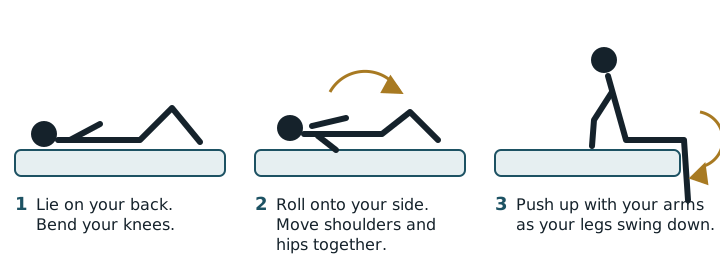
Getting in and out of bed
Use the "log roll." It keeps your back straight so you don't twist.
Rest and activity
- Walk. Walking is the best exercise after back surgery. Walk several times a day. Go a little farther each day.
- Do not lift anything heavier than 10 pounds until your surgeon says it is OK. A gallon of milk weighs about 8 pounds.
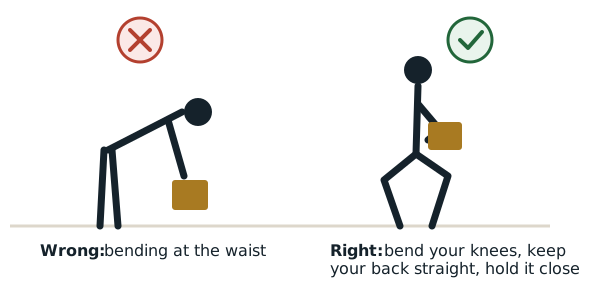
- Avoid the three "B-L-T" moves: Bending, Lifting, and Twisting at the waist.
- Do not sit for more than 30 to 45 minutes at a time. Get up and walk around.
- Sit in firm chairs with arms. Soft, low couches are hard to get out of.
- Use a grabber tool to pick things up from the floor.
- If you were given a back brace, wear it the way your surgeon told you.
Driving and riding in a car
Do not drive while you take opioid pain medicine, or until your surgeon says it is OK. On long car rides, stop every 30 to 45 minutes to get out and walk.
Medicines
- Take pain medicine as directed. Opioids can cause constipation. Drink plenty of water, eat fiber, and use a stool softener if you were told to.
- If you had a fusion, ask before you take ibuprofen (Advil, Motrin) or naproxen (Aleve). Some surgeons ask you to avoid these while the bones heal.
- Do not smoke or vape. Nicotine slows bone healing.
Call 911 or go to the ER right away if you have:new trouble controlling your bladder or bowels, or numbness in your groin or inner thighs (the area that would touch a saddle). These can be signs that nerves are being squeezed.
Call our office if you have:new or worse leg weakness, leg pain that is much worse than before surgery, a fever of 101°F or higher, or signs of infection. See When to Call Us.
Your care team's instructions come first.This page is general information. If anything here is different from what your surgeon or nurse told you, follow their instructions.