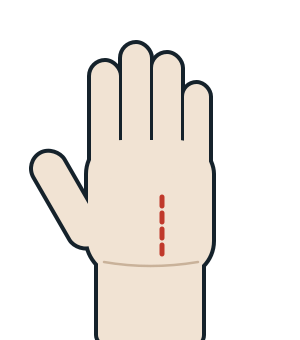
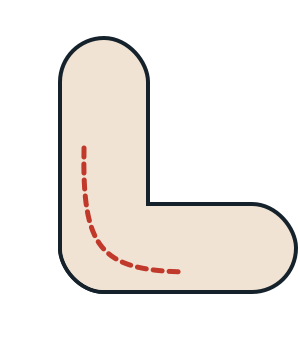
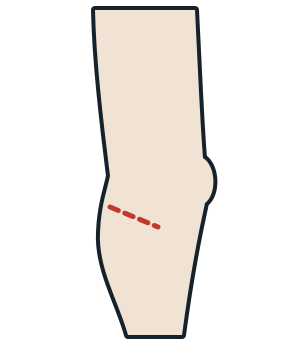
The red dashed line shows about where the incision is made for each surgery.
What is normal
- Soreness and swelling near the incision for a few days to a few weeks.
- Tingling or numbness that is slow to go away. Some people feel better right away. For others, it takes weeks or months. Nerves heal about an inch a month.
- A tender scar. The scar may feel firm or sore for a few months. Gently rubbing it after it heals can help.
The first few days
- Keep it raised. Keep your hand above your heart, or your leg up on pillows, as much as you can. This lowers swelling and pain.
- Ice can help. Put a thin towel between the ice pack and your skin. Use it for 20 minutes at a time.
- Keep the bandage clean and dry. Cover it with a plastic bag to shower. Ask when you may take it off.
Using your hand, arm, or leg
- After hand or elbow surgery, gently move your fingers often each day. This keeps them from getting stiff.
- Do light tasks like eating and getting dressed. Avoid heavy gripping, pushing, or lifting until your surgeon says it is OK.
- After surgery near the knee, walk as you were told. Use a walker, cane, or crutches if you were given them.
- Ask before you go back to work, especially if your job uses your hands or involves a lot of standing.
Driving
Do not drive while you take opioid pain medicine, or until you can grip the wheel or press the pedals safely. Your surgeon will tell you when.
Call our office if you have:fingers or toes that turn pale, blue, or very cold; a bandage that feels too tight and does not get better when you raise your arm or leg; pain that keeps getting worse; a fever of 101°F or higher; or signs of infection. See When to Call Us.
Your care team's instructions come first.This page is general information. If anything here is different from what your surgeon or nurse told you, follow their instructions.